One thing that even casual observers may recognize as a staple of Donald Trump’s rallies over the past decade is his recitation of the lyrics of the 1963 song “The Snake.” There’s a formula to it. He presents it as a poem as he theatrically pulls out a piece of paper to read it, often saying that he only does this because of all the requests he gets for it. He has read the text so many times that you might wonder why he still needs it written down. After building so much of the Trump 2.0 brand on the feeble-mindedness of his only slightly older predecessor, could he be losing his memory? It’s a distinct possibility. But also, theatrics are his strong suit, and it’s too late to teach him new tricks.

His “poem” was written and recorded by soul singer Oscar Brown (complete lyrics here), although Trump never acknowledges its author. It sold relatively well at the time and was then recorded by Al Wilson in 1968, which became the best-known version. The lyrics tell a story of a woman who finds a “half-frozen snake” on her way to work one morning. She takes the snake in, warms him by the fire, and gives him “some honey and some milk” until he has been revived. But being a snake in a parable, he bites the woman, and before she dies, she asks him how he could do such a thing. His reply:
“Oh shut up, silly woman,” said the reptile with a grin
“You knew damn well I was a snake before you took me in”
Each verse ends with the same refrain:
“Take me in, oh tender woman
Take me in, for heaven’s sake
Take me in oh tender woman,” sighed the [vicious] snake.
Brown didn’t include the word “vicious.” That’s just something Trump likes to add, likely because he can’t work out the rhythm otherwise.
The lyrics are not particularly complex, but in context, the story they tell says a number of things about Trump, his supporters, and the way that far-right narratives often function. So the following is going to be an attempt to break down why its content appeals to MAGA movement participants, how Trump’s presentation deviates from what Brown (or Wilson or any other singer who has ever recorded “The Snake”) likely ever intended, and how it fits into the cosmos of reactionary rhetoric more broadly. It’s about gender, it’s about race, it’s about history, and it’s even about empathy. That sounds like a lot to suck out of such a simple song, but its simplicity is what makes it a useful entry point into the broader issue of far-right narrative. So here goes…
Who’s Who In This Story
Read out as a poem, “The Snake” sounds trite. The fact that the president of the United States (or a viable candidate) would spend time reading what sounds like a moralizing bedtime story to throngs of his most devoted supporters says something about his relationship with them, and I don’t just mean that in a snarky or derogatory way. In all its banal simplicity – and its cynicism – the story it tells offers us a glimpse of the cognitive machinations of a genuinely fascist mindset.
The song, as Brown wrote and performed it, serves as a kind of cautionary tale: if you get close to a vicious person, don’t be surprised when that person hurts you. So far so good.
There are only two characters in this story: a victim, full of empathy and characterized as “tender-hearted,” and a villain, a murderous ingrate who does what he does because he can’t help himself – that’s just the way he is. In the original recording, Brown (unlike Wilson) alters his voice when singing from the snake’s perspective, tightening his throat to produce a harsh, raspy sound, and he does it right from the first verse, so there is never any mystery about how we’re meant to feel about this character.
The story works as a broad metaphor for certain interpersonal relationships, and in a society that typically assigns care work to women, the snake (who is referred to with male pronouns) might represent a man who takes advantage of that labor and maybe even “sucks the life out of” a woman who supports and nurtures him. Brown was a long-time civil rights activist and, for a while, a member of the Communist Party (he left the party in the mid-1950s, later saying that he was “just too black to be red”), so conceivably it could also be interpreted even more broadly as a commentary on race relations in the US or between labor and capital. Ultimately, a narrative this simple can be applied in all kinds of ways, although the gender of the characters is clearly spelled out and unambiguous, whereas there is nothing in the lyrics about waged labor or commodity production, and a race metaphor would only work if we can conceive of “race” as comparable with “species,” which seems unlikely from an anti-racist perspective. It is also possible that Brown didn’t have any particular metaphor in mind at all, or that he just wanted to leave it open to interpretation.

Donald J. Trump, however, doesn’t do nuance. He has no interest in allowing his supporters to interpret this particular story for themselves (although there are plenty of other instances in which he points them in a certain direction and encourages them to draw their own conclusions, often either because he has no idea what he’s talking about or because spelling out what he means would accrue a political cost). On August 10 of this year, the official White House website published a video montage of brown-skinned men being arrested by immigration officers to the sound of Trump’s recitation. The video is titled “The Snake Poem,” once again obscuring Brown’s authorship and misrepresenting the text as a poem rather than song lyrics. But most important is the association it is clearly meant to make between deporting Latin American men and protection against a predatory animal.
If that is still too subtle, about 26 minutes into a C-SPAN recording of a March 2025 speech, Trump leads up to his rendition of “The Snake” by saying that “[i]t’s a very accurate metaphor, and it’s about our border. It’s about the people we have coming in. And don’t be surprised when bad things happen, because bad things will happen, and we’re gonna get ‘em out fast, we’re gonna have the largest deportation effort in history.” He then reads the lyrics, and at the end of the final verse, after the snake has bitten the woman, he breaks off and says, “Now that’s what we’re going through right now. We’re taking in snakes. We’re taking in snakes.”
Ambiguity is for the weak, I suppose.
After he finishes his reading, he briefly promises that, when he returns to office, “we’re gonna demand justice for Laken,” a reference to Laken Riley, a 22-year-old white woman who was murdered in Georgia in 2024 by an undocumented immigrant from Venezuela. Despite numerous studies showing that immigrants – particularly undocumented immigrants – engage in less criminal activity than people born in the US, Riley has become an ideal reference point for a far-right invasion narrative about a wave of brown-skinned men crossing the border to lay claim to (or contaminate) vulnerable white womanhood and possibly replace white people altogether. The fact that Riley’s killer was convicted of, among other things, assault with intent to rape only drives the point home. That invasion narrative is embedded in lots of far-right rhetoric, however its key figure is not, ultimately, the female victim, but rather then self-sacrificing male warrior tasked with protecting or avenging her. More on that below.
Guys, The Snake Is Really a Penis
In Trump’s telling, the snake is not just a bad individual. He is a member of an entire species of predators who are driven by instinct and just can’t help themselves. Moreover, the fact that the victim is a woman is particularly useful for Trump for several reasons. First, allowing a known predator into one’s home is naive. Who would do that? Even in vampire stories, the vampire is only invited in before being identified as a vampire (which, incidentally, casts an interesting light on JD Vance’s recent comment that Trump “wants to be asked” by mayors to intervene in local law enforcement). Certainly the MAGA crowd, a demographic that notably skews white and male, would never be so foolish. Among white men in the US, masculinity is often demonstrated through physical risks and challenges – sports, technical skill, daredevil behavior, military training, hunting – and not through the emotional risks involved with interpersonal trust, particularly where strangers are involved. Trump supporters also correlate pretty strongly with, for instance, gun ownership, and gun owners overwhelmingly cite personal protection as their main reason for owning guns. So these are often folks who are preoccupied with a fairly aggressive conception of personal safety, and a story that emphasizes the folly of caring for strangers may well offer the comfort of reaffirming what they, in many cases, already believe.
Second, at least from the snake’s point of view, the woman is responsible for her own demise. He not only kills her, but also blames her for her own premature death, telling her “You knew damn well I was a snake before you took me in.” Another way to say this might be “If you didn’t want to get bitten, you shouldn’t have brought me into your home.” This is not a far leap from other common responses to violence against women like asking “what was she wearing?” or dismissively saying “she was drunk” – language that reframes that violence not as someone else’s act of aggression against her, but rather as an error in her own judgment. How better to express that than by grinning while saying “Shut up, silly woman!” and telling her that she knew what she was getting into even while she is dying?
It should be noted that Trump tends to get much more animated when reading this final verse. His voice gets louder, he often speaks at a higher pitch when saying the woman’s lines (although he notably does not tend to change his voice when speaking from the snake’s perspective), and he really lays into the part where he gets to tell a woman to “shut up.” Given the many accusations of sexual assault against him, the judgement of liability in one of those cases, and his continued effort to block the release of documents pertaining to Jeffrey Epstein’s sex-trafficking gulag or his own relationship to it, it is not a stretch to read this as a shift not only in tone, but also in perspective: while Trump’s goal is to vilify immigrants by means of an analogy with a predatory animal, he also seems to identify with the snake, a point that has also been made elsewhere, including by Oscar Brown’s daughter.
But how is it that a person can identify with both the victim and the villain in the same story?
This makes sense if you consider that fascism is, above all else, always a matter of domination over other people. Anyone who spends any time at all looking at far-right social media will likely notice pretty quickly that, for instance, commenters alternately refer to antifascists as scrawny, effeminate, powerless creatures who are incapable of standing their ground and as hulking violent thugs capable of terrorizing entire cities. They have similarly contradictory ways of talking about lots of groups of people they don’t like because fascists are nothing if not opportunists, and they will take power wherever they can find it. Sometimes they find power in proclaiming their own victimhood: by identifying with the woman in “The Snake,” they can cast themselves as sympathetic victims of someone else’s violent nature, which in turn justifies “hitting back first,” or proactive violence justified as preemptive self-defense. Other times, they will align themselves with anyone – really anyone – who they regard as sufficiently ruthless to take power over someone else who is in a socially weaker position. So, for instance, they can simultaneously condemn all Muslims for the threat that Islam ostensibly poses to women and children while also championing ideas like “white sharia” or openly admiring the Taliban specifically because of its extremely misogynist and controlling interpretation of Islamic law. There is no contradiction between these two positions if we consider that fascists are primarily driven not by morality or cultural affiliation but rather by their desire for domination.
In short, “The Snake” is a narrative that alternately offers reactionary-minded people two perspectives to relate to: on one hand, they can identify with the predatory figure of the snake who dominates and scoffs at the naive, empathetic woman, and on the other, they can relate to the woman as a victim doomed by her own empathy in the face of someone else’s uncontrollable predatory instincts.
I take back what I wrote above: ambiguity is for the “strong.”
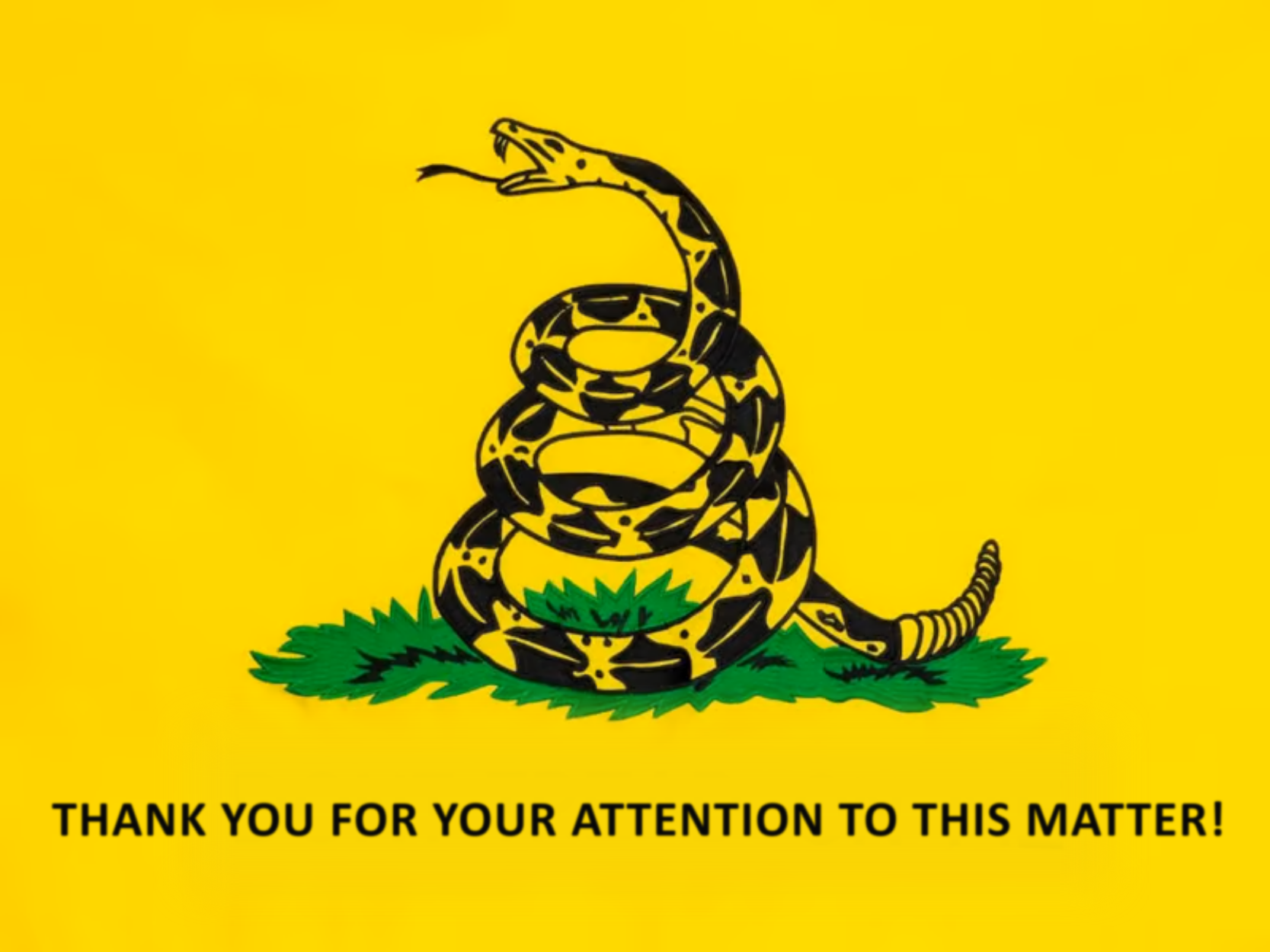
Which brings us to the last point. In the midst of all of this, there is a third character who is not present, but whom dominance-seeking individuals nonetheless are apt to identify with most of all.
Fascists tend to be very fond of narratives that follow certain formats. They like their heroes and villains to be clearly defined, and they usually want those heroes to assert “traditional” male characteristics (albeit from a very narrowly prescribed “tradition”), including physical strength and, in particular, a self-sacrificing urge to protect women and children. You can see it in the Spartan imagery popular in the prepper and militia scenes, it is built into the exhortation to “secure a future for white children” in the infamous neo-nazi slogan “the 14 Words,” and it is at the core of the “manosphere” and incel ideology. It is also why people who harbor anti-immigrant attitudes are so eager to turn women like Laken Riley into symbols and create the impression that her story is much more common than it actually is.
That male hero is missing from “The Snake,” and look what happens. The need for his presence is borne out by the consequences of his absence. A woman left without protection will foolishly bring about her own demise due to her excess of empathy in a world crawling with predators. From a MAGA perspective, being so naively trustful is literally fatal, and the best protection against that is a strong, masculine warrior who can take charge, be decisive, rule by fiat, and eliminate all threats without remorse. That, ultimately, seems to be at least one moral of this story.
Postscript
I’m going to leave this here for now in the interest of brevity (all things relative), but there’s a lot more to say about the long history of rhetoric that dehumanizes racialized populations by presenting them as mere forces of nature – either as animals driven only by instinct or, in many cases, as phenomena like “floods” or “tides” that rush in and overwhelm the community of real, self-aware people. This is a whole field of rhetoric that may have reached its high point (to date) in the late nineteenth and early twentieth centuries, when “race science” was reaching its broadest acceptance, European colonialism was just starting to show signs of vulnerability (raising fears of backlash from colonized populations), and eugenics was widely regarded as a good – even a progressive – idea.
I plan to address all of that in future posts, as well as the trope that “white people have too much empathy,” which Elon Musk helpfully brought up very publicly earlier this year, but which has been a common refrain among neo-nazis and white nationalists for along time. For now, though, I’ll just leave it at this: if you need to tell the world that you suffer from having so much empathy that you’re constantly being taken advantage of, you can pretty well rest assured that an excess of empathy is not really a problem for you.
 Total Propaganda